
Newspaper advertising in Delhi NCR: how to plan a print campaign
Which paper, which edition, which format, which morning — and how to tell whether it worked.
ABC Mediamix editorial team7 min read
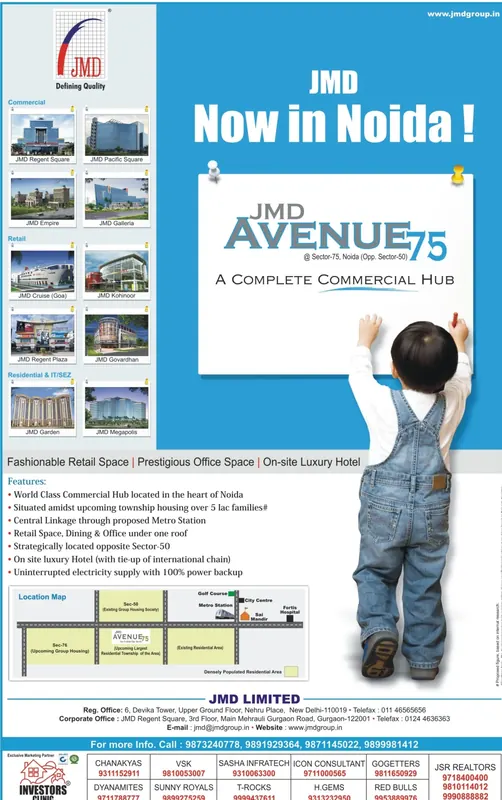
A newspaper ad in Delhi NCR is four decisions before it's a piece of design: which paper, which edition, which format and which morning. Get those right and an ordinary layout will still find its buyer. Get them wrong and the best headline in the world lands in front of people who were never going to call. This guide walks through each decision the way we make it for clients — then booking, rates, and how to measure what came back.
Start with the buyer, not the paper
Before comparing papers, write down three things: who has to read this ad, where in NCR they live, and what you want them to do the same day. A first-home buyer in Greater Noida West, a family choosing a school in Noida Extension and a business-owner looking at office space on Sohna Road read different papers, in different languages, on different days.
The answer usually narrows the field to two or three papers and a specific edition before any rates come into it.
English, Hindi and the city supplements
NCR has two large newspaper audiences that overlap less than people assume. English main editions and their city supplements reach one; the Hindi dailies reach another, often with stronger presence in Noida, Ghaziabad and the western Uttar Pradesh towns around them. The table below shows where our own archive has run, as a practical starting point rather than a ranking.
| Paper | Language | Examples from our work |
|---|---|---|
| The Times of India (with Delhi Times, Noida Times) | English | Jackets for JMD Avenue 75 and Patliputra Signature Park; half pages for Ryan International School and Intown Vault |
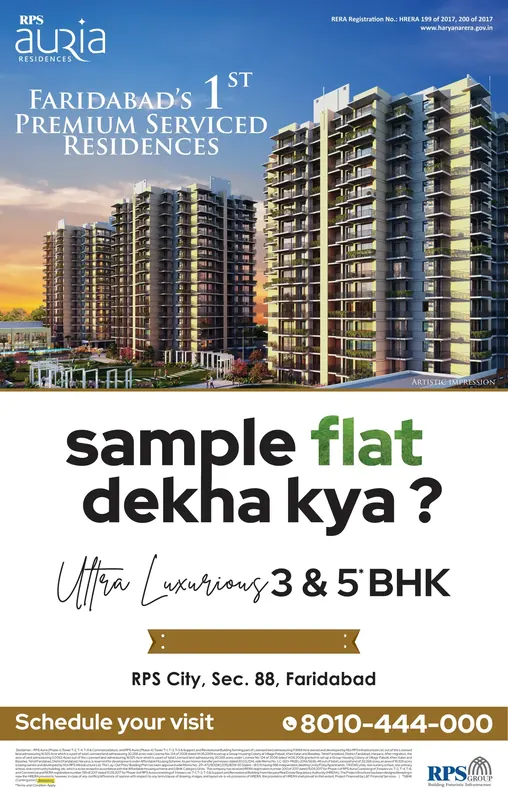
| Hindustan Times (with HT City) | English | Jackets for Aims Golf Avenue, Vardhman Alfa Square and WTT; full pages for RPS Auria and Oasis Grand Stand in HT City |
| The Indian Express | English | A half page for MVD Infra's Deen Dayal Awas Yojna |
| Navbharat Times | Hindi | Full and half pages for Supercity Mayfair, Galaxy Vega and Newway Homes' Green Arch |
| Dainik Jagran | Hindi | Woodbuzz's Diwali and Navratri sales; Ascent Satya Ville De's Diwali page |
| Amar Ujala | Hindi | KCC Institute admissions; Unnati Fortune's The Aranya launch in Sector 119, Noida |
For audience size, look at independent sources rather than a paper's own sales deck: the Indian Readership Survey (IRS), published by the Media Research Users Council, for readership, and the Audit Bureau of Circulations for certified circulation figures. (The Audit Bureau of Circulations is no relation of ours — it's a coincidence of initials.)
Language is not only a question of reach. In our experience the budget of the product often decides it: the more affordable the home, the more likely the ad is in Hindi, even in an English city supplement. We wrote about that in Sample flat dekha kya?.
Main paper, edition or supplement?
Large papers sell space in more than one product. The main paper reaches the whole city edition; zonal editions and supplements reach part of it, at a lower price. For an NCR advertiser whose buyers are concentrated in one area — a Noida project, a Gurugram school — a zonal edition or city supplement is often the most efficient choice. For a launch that needs to look important across the region, the main paper is worth the premium.
Choosing the format
- Jacket. The ad wraps the paper, so it's the first thing anyone sees that morning. For launches and festive days. See what a jacket ad is, and when it's worth it.
- Full page. Room for a story — the location, the plan, the amenities, the payment plan.
- Half page. The workhorse of a sustained campaign: payment-plan ads, schemes, admissions.
- Quarter page and smaller. Frequency and reminders — an event date, a last week of offer.
- Editorial feature. A paid feature written as a story, for brands where trust matters more than an offer — schools, hospitals, anniversaries.
Position matters as much as size. Front page, page 3, the back page and the first right-hand pages all carry premiums because more readers see them. Colour usually costs more than black and white.
How newspaper advertising rates work
Every paper publishes a rate card. Display advertising is generally priced per square centimetre (often called a column-centimetre) for a particular edition, so the cost of an ad is its height multiplied by its width multiplied by the rate. Special formats — jackets, front-page solus ads, strips and other innovations — are usually priced per insertion instead. On top of the base rate come premiums for colour, position and specific days, and GST.
Rate cards are a starting point, not a price. What you actually pay depends on the edition, the date, the volume booked across the year and the negotiation. When comparing quotes, make sure they describe the same thing:
- the paper and the exact edition or supplement
- the date, and whether it's a premium day
- the size in centimetres (width × height) or the named format
- the position, and whether it's guaranteed
- colour or black and white
- taxes, and any agency or production charges
Booking: release orders, deadlines and material
A booking is confirmed by a release order to the paper, naming the edition, date, size, position and rate. Ordinary display ads can often be booked a few days ahead; jackets, front pages and festive dates should be booked as early as you can, because only one advertiser gets each of them per edition per day.
Material is due before the paper's deadline, made to its mechanical specifications — exact dimensions, bleed, colour profile and resolution. Leave time for a proof. If the ad runs in more than one paper, each one gets its own artwork at its own size; a full page in one paper is not the same size as a full page in another.
What a good newspaper ad does
- Leads with one headline that could only belong to this brand.
- Puts information in order of importance: the idea, the offer, the details, the contact.
- Builds the compliance in from the start — for real estate, the RERA registration number and website.
- Is written in the language the reader thinks in, not translated into it.
- Gives the reader one clear thing to do today.
Measuring the response
Print is easier to measure than its reputation suggests, as long as the measurement is planned before the ad runs.
- Use a phone number, WhatsApp number or QR code that appears only in that paper.
- Ask every caller and visitor where they saw the ad, and record it the same way every time.
- Compare enquiries on the days after the ad with an ordinary week.
- Work out the cost per enquiry and per site visit for each paper, not just the total.
After two or three insertions, the numbers usually make the next plan obvious: one paper pays for itself, one doesn't, and the budget moves.
Mistakes we see most often
- Booking the paper with the biggest circulation instead of the one the buyer reads.
- Running a single insertion and judging the medium on it.
- Using one phone number everywhere, so nothing can be measured.
- Shrinking a hoarding layout onto a newspaper page, or the reverse.
- Leaving festive dates until the good positions have gone.
How much does a newspaper ad cost in Delhi?
It depends on the paper, edition, size, position, colour and date, so there's no single figure. Display ads are priced per square centimetre from the paper's rate card; jackets and other special formats are priced per insertion and cost considerably more than an inside page. Ask for quotes that specify all of these so they can be compared.
Which day is best for a newspaper ad?
Weekends usually suit decisions that families make together — property, schools, big purchases — and many property supplements run on fixed days of the week. Event and sale ads work best a day or two before the date. Premium days cost more, so test whether the extra response is worth it.
Is newspaper advertising still worth it?
For categories where the decision is considered and local — real estate, education, healthcare, retail events — it remains one of the most effective ways to reach NCR households, especially when it works alongside outdoor and digital rather than on its own.
If you'd rather have someone plan, write and book it, that's what we do — see newspaper advertising with ABC Mediamix, or talk to us about a campaign.